Jan from Kanab
Some places have an aura about them; a sense of belonging and connection. For myself, its Kanab, Utah - my spirit power place. The town itself and the natural surroundings are what did it for me. Named for the Paiute word meaning "place of the willows”, it is located in Southern Utah near the Arizona border, and centered around a robust farming, ranching and recreational community. It is often nicknamed “Little Hollywood” because the landscape has served as the backdrop for numerous classic motion pictures, including “Stagecoach”, “El Dorado”, and “Planet of the Apes”, as well as popular old western television series “The Lone Ranger” and “Gunsmoke”. A true naturalist can appreciate the red rock mountains, canyons, sand dunes, and high desert climate that offer spectacular dark night skies. My first experience in Kanab was at a campsite just outside of town. After riding all day through monsoon showers, I set up camp, pitched my tent for the night, and poured a drink from my flask to watch the desert sunset. Little did I know it would be a trip I would not forget, the first of many in Utah. The woman I met the next morning is the focus of this logbook entry.
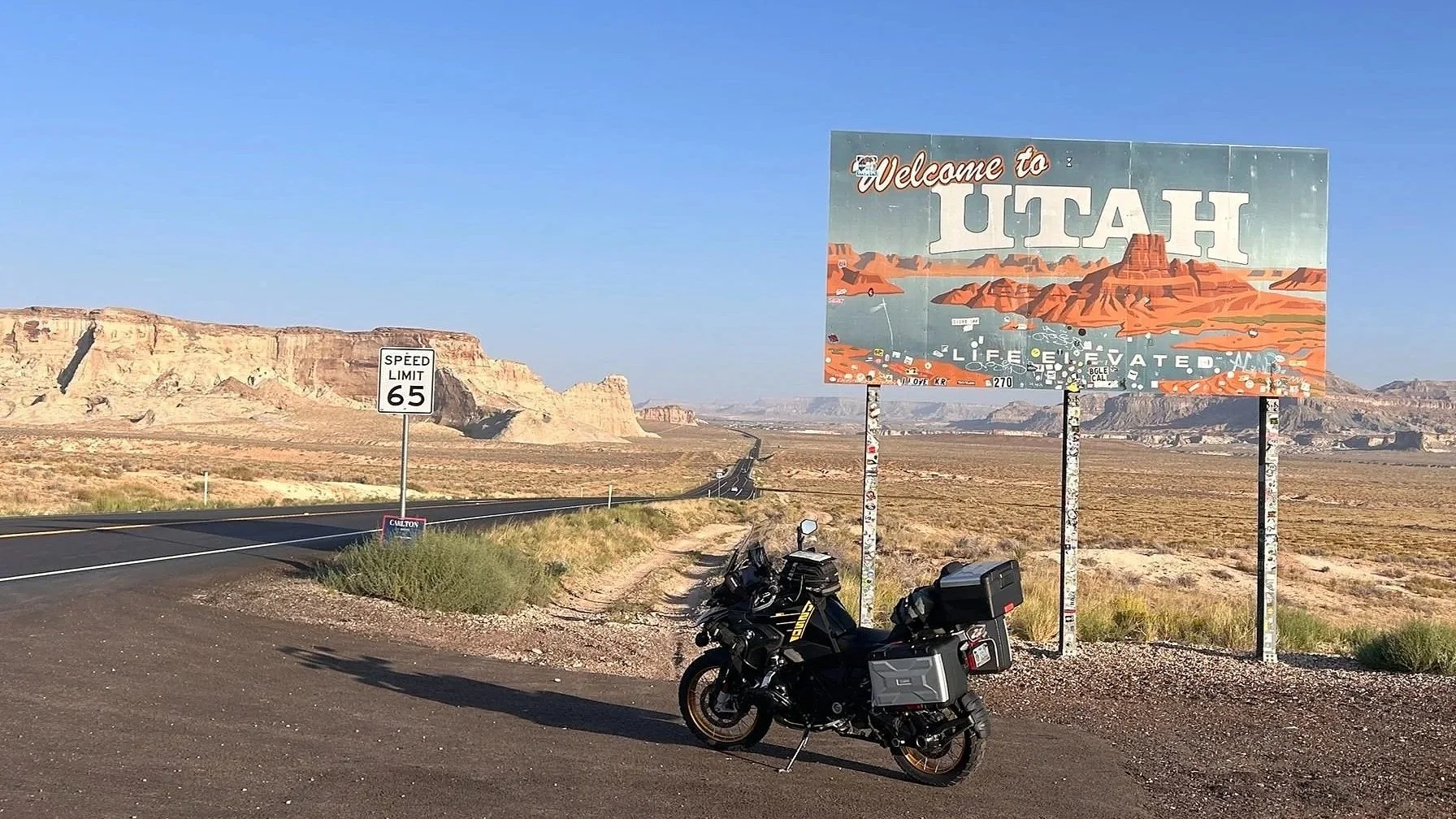
U.S. Highway 89 at the Arizona and Utah Border
My first night in Utah started out ominously. According to old Navajo folklore, mythological creatures, or witches, called “skinwalkers” are said to exist in the area. These possessed demonic beings transform into animals like coyotes, wolves, and birds. Interpretations of this phenomenon differ across Navajo culture; some argue it's a gross misinterpretation, while others believe "skinwalkers" are people practicing a wicked form of magic. Upon meeting the camp host, she shared a story about recent campers who frantically packed up and left in the middle of the night after claiming to have seen spirits circling their tent. I didn’t have any supernatural encounters during my stay, only the night sounds of crickets and coyotes howling. Although I did notice some strange images through my tent fabric, which turned out to be reflections of vehicle lights from the nearby road. Perhaps the local spirits didn't mind my presence for the night, as I appreciated the serenity and solitude of the dark sky and bright moonlight.
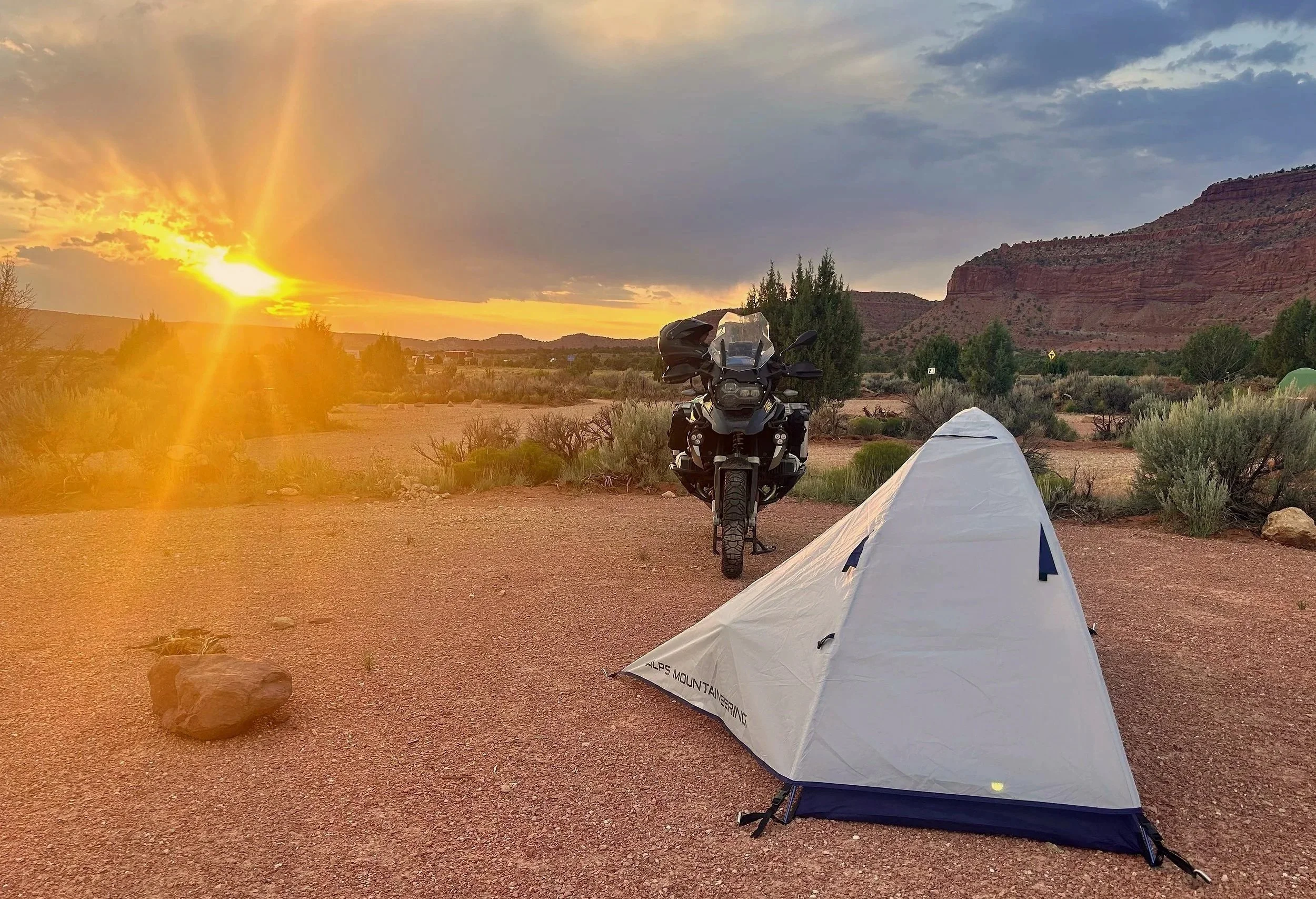
Campsite in Kane County near Kanab, Utah.
The next morning, I woke before sunrise to pack up my site. Coffee was my top priority before the long ride ahead. Making my way through town in the early morning hours, I took a chance on a local shop with a sign that read "Gear, Books & Coffee”. Picture a small, one-room commercial space, one side filled with outdoor hiking gear, and the other with books, floor to ceiling, about nature, plants, geology, and the American Southwest. The shelves were stocked with books by naturalist authors like Edward Abbey, Craig Childs, Robin Wall Kimmerer, and Robert Moore. When I first walked in, I knew I'd be back. The brewed coffee selections from local organic roasters, the books, the gear – it all made me want to stay longer than planned. I was running with fully loaded panniers, so I purchased a small book titled “This desert hides nothing”. It fit in my luggage without taking up too much space and was more of a keepsake.
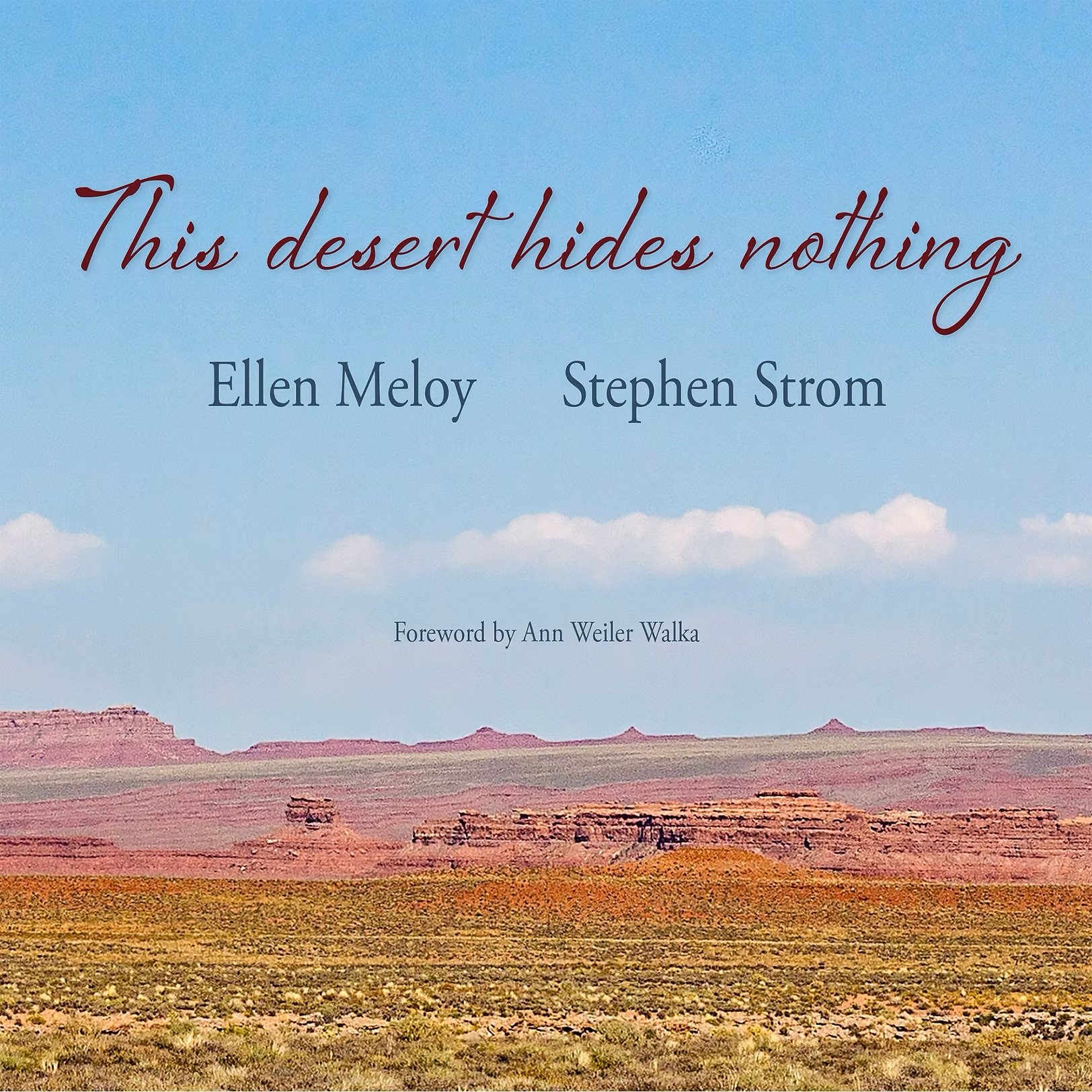
“This desert hides nothing” is written by naturalist Ellen Meloy and photographer Stephon Strom. It is a simple book of images and text expressing their shared love of the desert.
With my cup full to the brim with coffee and my book in hand, I walked outside and took a seat at one of the patio tables. That's when I met Jan from Kanab. She was an older woman, probably in her mid to late 60s. She fit the Kanab image: dressed in layered outdoor clothing, worn-out hikers, and a wide-brimmed hat – she could have been the mayor or a tour guide for all I knew. She looked over at me and, with a welcoming gesture, asked if I'd like to share some of the shade at her table. We got to talking right away. Jan was a retired U.S. Naval officer who served in the 1980s and 1990s. She asked me where I was headed and where I had been - on my trip and in life. We discussed that topic for a while when she began to share details about her recent trip to Africa. She climbed Kilimanjaro with a group of female military veterans a mere 12 months after experiencing a fractured pelvis and a total hip replacement. Interestingly, the youngest member of the group had to be medevaced due to altitude sickness. Jan, however, was hard as nails and full of grit—the type of person who doesn't let adversity limit her life path, even when faced with climbing to 19,000 feet on the highest mountain in Africa. I had a long journey ahead of me, but for the moment I was content with getting to know Jan and enjoying my coffee.
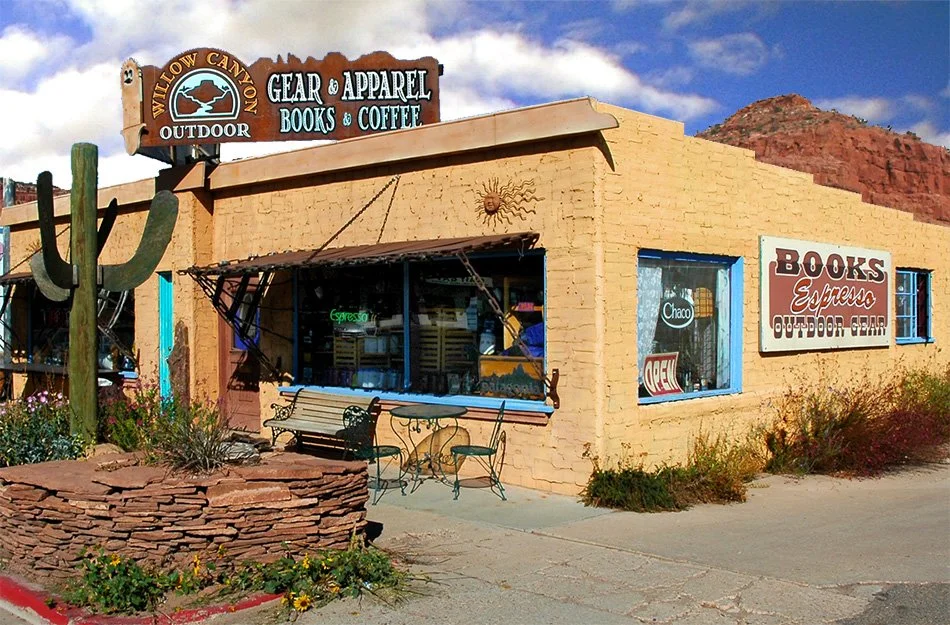
Willow Canyon Outdoor in Kanab, Utah
There’s something about riding a two-wheeled machine that sparks the most interesting conversations with people. Jan and I talked at length about our time in the military and the challenges younger veterans face when transitioning back to civilian life. We were totally in agreement on the issue. A positive attitude, perseverance and a willingness to try new things were the secret ingredients in creating an exciting new chapter. The conversation was going well but I was running out of coffee and it was time to get back on the road. What inspired me most about meeting Jan was her attitude about life. Nothing was going to hold her back. Willow Canyon Outdoor has become one of my favorite places to visit in Kanab, and it all started with this first experience and meeting Jan. An hour later we parted ways and I was on the road traveling north through some of the most scenic roadways I’ve ever ridden.
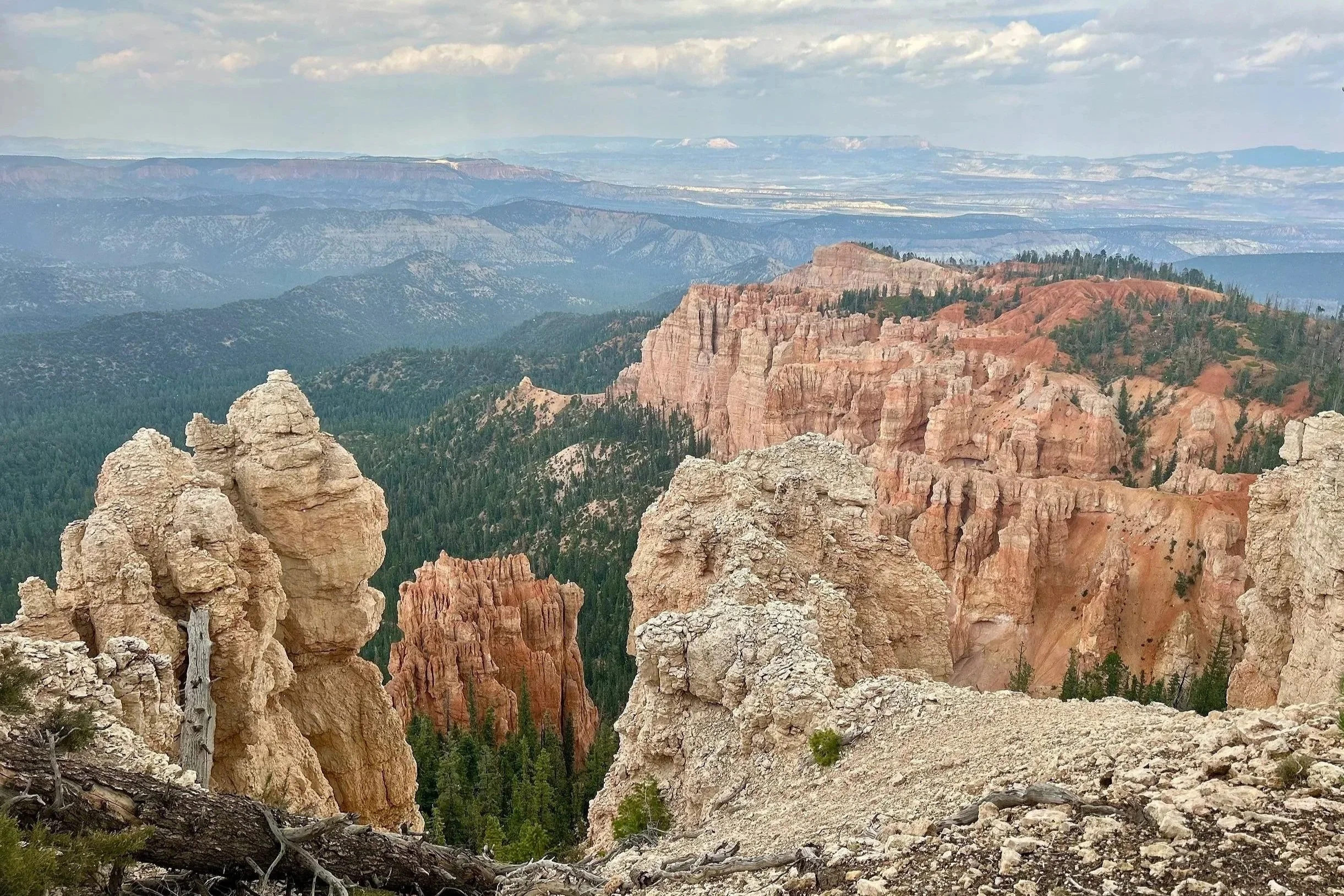
Bryce Canyon National Park
With an overloaded motorcycle and a full tank of gas, I took U.S. Highway 89 toward Manti-La Sal National Forest. This historic highway, known as "Heritage Highway," connects the northern and southern parts of Utah, traversing the mountainous landscapes of the central part of the state and allowing easy access to Bryce Canyon and Zion National Parks. As I made my way on the remote and scenic two-lane highway, I thought about the sunset from my campsite the night before, the tale of the “skinwalkers”, finding Willow Canyon Outdoor, and meeting Jan. And with a smile on my face and a steady mind, I continued on. There's more to Kanab than just the scenery, the folklore, and inspiring people that keeps me coming back to this corner of the world. It's a place that embodies the tree that the town is named after – a symbol of strength, resilience, and renewal. I also realized it's not just the places you go, but the people you meet along the way that leave an indelible mark on the journey. Ride safe, and wherever you're headed, enjoy the adventure.
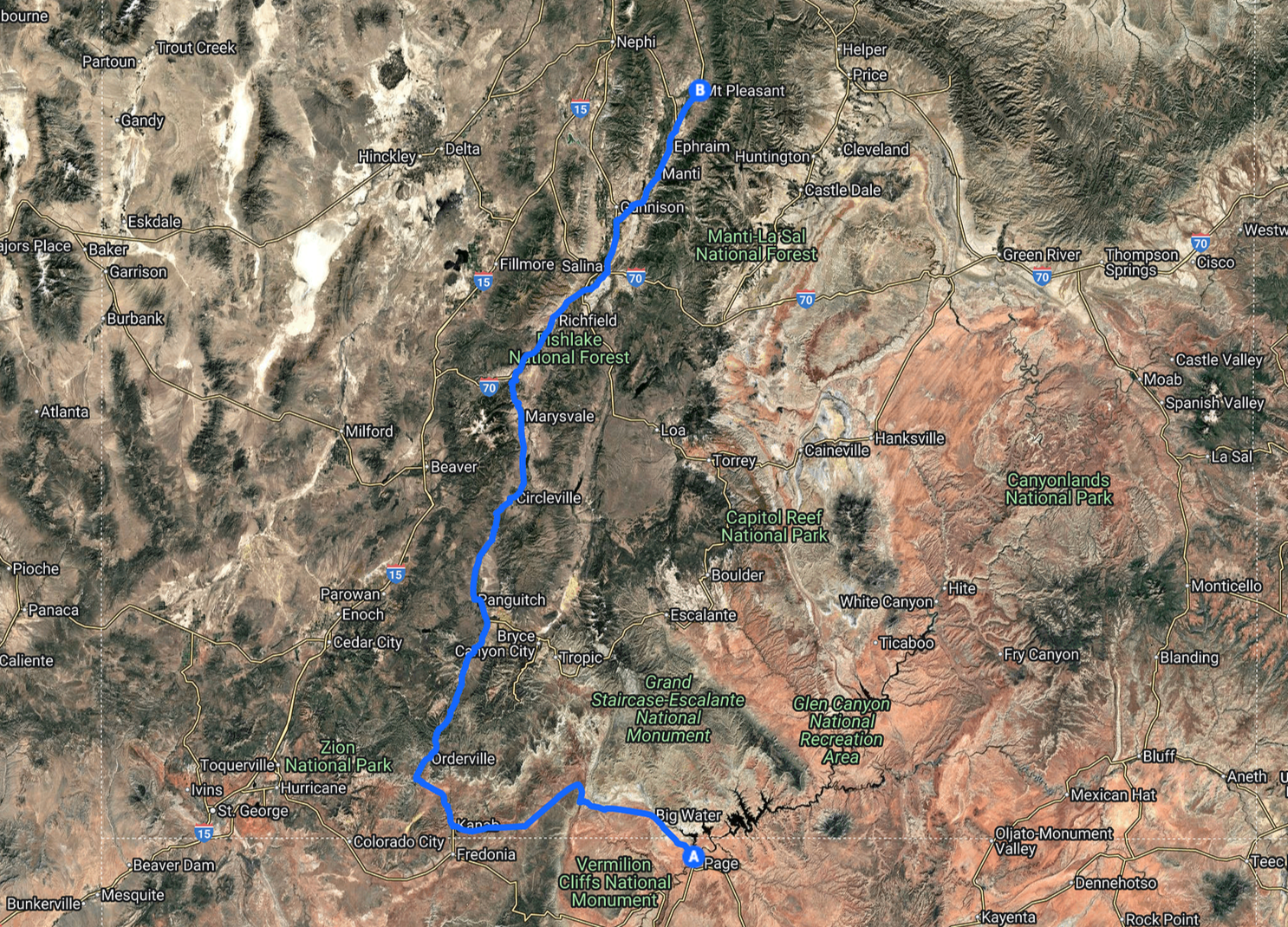
U.S. Highway 89, “Heritage Highway”
Kanab, Utah is approximately 300 miles from the Greater Phoenix metro area. There are a number of ways to get there, although I recommend Native AmericanVeterans Highway for the most scenic paved route. For more information about routes in this area, including elevation profiles and GPS coordinates, you can purchase a Butler Motorcycle Map highlighting the best dirt and paved roads in Utah. Use the code "losthighways" to receive a discount.
Disclaimer: Mileages are approximate. Each rider is responsible for checking the current road conditions and assessing their own skills to ensure safety. All routes are provided "as is" without any liability.
Note: The content of this logbook entry is original and not AI-written. It consists of my personal accounts after scouting the routes myself.
Copyright Protected © 2026 Lost Highways LLC. All rights reserved.
